

POSTED
March 25, 2026
Creating a Legacy with Renewable Energy Investments: What Every Investor Should Know

The decisions we make with our capital today will shape the world our children and grandchildren inherit. For investors seeking to build wealth while leaving something meaningful behind, renewable energy offers a rare convergence of financial opportunity and lasting impact. This is not just about portfolio returns but about participating in one of the most […]

The decisions we make with our capital today will shape the world our children and grandchildren inherit. For investors seeking to build wealth while leaving something meaningful behind, renewable energy offers a rare convergence of financial opportunity and lasting impact. This is not just about portfolio returns but about participating in one of the most significant economic transformations in history and ensuring that transformation succeeds.
Renewable energy investment has moved from the margins to the mainstream. According to the International Energy Agency, global energy investment was projected to reach approximately $3.3 trillion in 2025, with clean energy technologies attracting roughly $2.2 trillion. This is nearly double the expected investment in fossil fuels. This shift represents more than a trend; it reflects a fundamental reordering of how the world produces and consumes energy. For investors, the question is no longer whether to participate but how to do so in ways that align with both financial goals and the desire to leave a positive mark.
The Broader Picture: Why Renewable Energy Matters
The transition to renewable energy addresses one of humanity’s most pressing challenges. Climate change is already disrupting economies, communities, and ecosystems worldwide. Rising temperatures, extreme weather events, and shifting agricultural patterns carry real economic consequences that will compound over time without intervention.
Renewable energy offers a pathway forward. Solar, wind, and other clean technologies provide electricity without the carbon emissions that drive climate change. Each megawatt of renewable capacity installed displaces fossil fuel generation, reducing the greenhouse gases entering our atmosphere. The cumulative effect of millions of these individual contributions is what makes the energy transition possible.
In 2024, renewables accounted for over 90% of new power capacity additions globally, according to the International Renewable Energy Agency (IRENA). This dominance in new infrastructure demonstrates that clean energy is no longer an alternative but has become the default choice for meeting growing electricity demand. The infrastructure being built today will operate for decades, shaping the energy landscape well into the second half of this century.
From Global Transformation to Individual Impact
Understanding the scale of the energy transition is important, but what does it mean for an individual investor? How does a single investment contribute to something as vast as reshaping global energy systems?
The connection is more direct than many realize. When capital flows into renewable energy projects, it enables the construction of physical infrastructure. Infrastructure such as solar panels mounted on frames, transmission lines connecting clean power to the grid, substations delivering electricity to homes and businesses. These are tangible assets that have the capacity to generate clean energy for 25 to 40 years or more. Every project that reaches completion exists because investors provided the capital to make it happen.
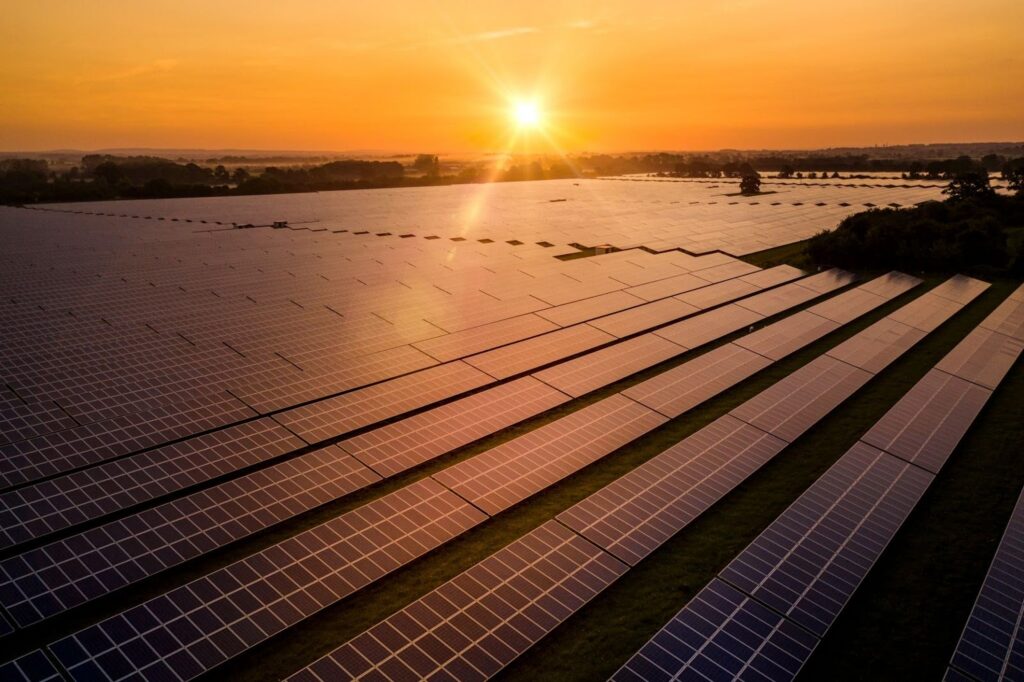
Consider utility-scale solar. A single large solar installation can power tens of thousands of homes while avoiding hundreds of thousands of tons of carbon emissions over its operational lifetime. The investors who funded that project can point to specific, measurable outcomes: megawatts of clean capacity added to the grid, fossil fuel generation displaced, communities powered by the sun rather than coal or natural gas.
This tangibility distinguishes renewable energy from many other investments. You are not simply buying shares in a company hoping its stock price rises. You are funding infrastructure that produces essential energy while contributing to a cleaner environment. The legacy is built into the asset itself.
The Financial Case for Renewable Energy
Legacy-building does not need to be sacrificed at the expense of financial returns. The economics of renewable energy have improved dramatically, making clean energy investments increasingly competitive with traditional alternatives.
Solar energy costs have fallen by approximately 83% since 2010, according to the International Renewable Energy Agency. This cost reduction has made utility-scale solar one of the most affordable sources of new electricity generation in many markets. Wind power has followed a similar trajectory, with technological improvements driving higher capacity factors and lower costs per megawatt-hour.
These improving economics translate into tangible investment opportunities. Renewable energy projects typically operate under long-term power purchase agreements (PPAs) spanning 15 to 25 years, providing contracted revenue streams that offer a level of predictability that is uncommon in many investment categories. This contractual stability allows investors to model expected returns with reasonable confidence, though actual performance depends on project execution and market conditions.
Policy support has historically strengthened the investment case for renewables. The Inflation Reduction Act introduced substantial incentives including 30% Investment Tax Credits for solar and other technologies, enhancing after-tax returns for qualifying projects. However, the One Big Beautiful Bill Act has since shortened qualification windows and added new compliance requirements, altering the incentive timeline. Even so, utility-scale solar remains cost-competitive with fossil fuel generation in many U.S. markets on an unsubsidized basis, meaning policy incentives enhance returns rather than determine viability.
Research on renewable energy investment performance has shown competitive results. A joint study by the International Energy Agency and Imperial College Business School found that renewable energy portfolios delivered higher total returns than fossil fuel portfolios over both 5-year and 10-year periods in advanced economy markets, while also exhibiting lower volatility. However, as with any investment, past performance does not guarantee future results, and individual project outcomes vary based on numerous factors.

Beyond Returns: The Dimensions of Legacy
Financial returns matter, but legacy encompasses more than wealth accumulation. Renewable energy investments create multiple dimensions of lasting impact.
Environmental stewardship represents the most direct legacy. Each renewable energy project reduces carbon emissions for decades, contributing to climate stabilization efforts that will benefit future generations. The cumulative effect of clean energy deployment determines whether humanity successfully navigates the climate challenge. Investors in renewable energy become participants in that collective effort.
Economic development extends the impact to communities. Renewable energy projects create jobs during construction and operation, generate tax revenue for local governments, and often provide lease payments to landowners. These economic benefits flow to communities that host clean energy infrastructure, creating positive ripple effects beyond the environmental impact.
Energy independence contributes to national and regional resilience. Domestic renewable energy generation reduces exposure to the global commodity price volatility that has historically accompanied fossil fuel markets. Investing in clean energy infrastructure diversifies the nation’s energy mix and strengthens energy security for future generations.
Intergenerational wealth transfer takes on additional meaning when investments align with values. Many investors find that renewable energy holdings become a meaningful part of estate planning conversations, allowing them to pass along not just financial assets but participation in something they believe matters. The conversation shifts from “here is what I accumulated” to “here is what I helped build.”
How Individual Investors Can Participate
The renewable energy investment landscape offers multiple pathways for participation, each with different characteristics suited to different investor profiles.
Public market investments provide the most accessible entry point. Exchange-traded funds focused on clean energy offer diversified exposure with daily liquidity. Individual stocks in renewable energy developers, equipment manufacturers, and utilities with significant clean energy portfolios allow more targeted positions. These investments require no minimum beyond the share price and can be held in standard brokerage accounts.
Direct project investments offer more tangible connection to specific assets but typically require larger capital commitments and longer time horizons. Accredited investors may access opportunities to invest directly in solar farms, wind installations, or other renewable infrastructure. These investments often provide contracted cash flows but sacrifice liquidity for potentially higher returns.
Emerging structures are expanding access. Regulation A+ offerings allow both accredited and non-accredited investors to participate in certain private investments, including renewable energy projects. Green bonds provide fixed-income exposure to clean energy development. Crowdfunding platforms enable smaller investments in specific projects, though these carry higher risk and require careful due diligence.
Regardless of the vehicle chosen, investors should evaluate opportunities with the same rigor applied to any investment: understanding the assets involved, assessing the management team’s track record, examining the revenue model and risk factors, and ensuring alignment with personal financial goals and time horizons.
Utility-Scale Solar: Building Tangible Legacy
Among renewable energy options, utility-scale solar exemplifies the opportunity to create lasting impact alongside financial returns. These large-scale installations represent the backbone of America’s clean energy transition.
Utility-scale solar offers several characteristics that support legacy-oriented investing. The technology is mature and well-understood, reducing execution risk compared to emerging alternatives. Projects typically secure long-term power purchase agreements with creditworthy utilities or corporations, providing revenue visibility. The physical assets operate for 25 to 40 years, generating clean electricity across a multi-generational timeframe.
The impact is measurable and concrete. Over a 25- to 40-year operational life, a single installation generates enough clean electricity to power tens of thousands of homes while keeping significant volumes of carbon dioxide out of the atmosphere. Investors can point to tangible outcomes rather than abstract claims about sustainability.
At Shasta Power, we focus on utility-scale solar development from site identification through permitting and grid interconnection. Our development-focused approach captures project value during the early stages when careful site selection, regulatory navigation, and interconnection management create the foundation for successful projects. Each development we advance represents measurable impact: megawatts of clean capacity, carbon emissions avoided, and local economic benefits through job creation and tax revenue.
Conclusion
Renewable energy investment offers something increasingly rare in modern finance: the opportunity to build wealth while contributing to something larger than personal financial gain. The infrastructure being developed today will generate clean electricity for decades, shaping the energy landscape our children and grandchildren inherit.
The financial case has never been stronger. Cost reductions, policy support, and growing demand have positioned renewable energy as a competitive investment category with structural tailwinds. But the case extends beyond returns. Investors in renewable energy become participants in one of humanity’s most important collective projects—transitioning to a sustainable energy system capable of powering prosperity without compromising the planet.
Legacy is ultimately about what we leave behind. For investors seeking to align their capital with their values while pursuing financial objectives, renewable energy provides a pathway to do both. The projects funded today will stand as physical evidence of choices made and priorities honored.
For those ready to explore how utility-scale solar can deliver both measurable environmental impact and financial returns, connect with Shasta Power to learn more about opportunities in solar project development.