
POSTED
May 16, 2025
Solar Farm Economics: Analyzing ROI and IRR Trends for Investors

With global demand for clean energy accelerating, the economics behind solar are evolving fast. But how do these returns stack up against traditional assets like stocks or real estate? In this article, we unpack the fundamentals of solar farm profitability looking at key metrics like ROI and IRR, to help investors understand where purpose and performance intersect.
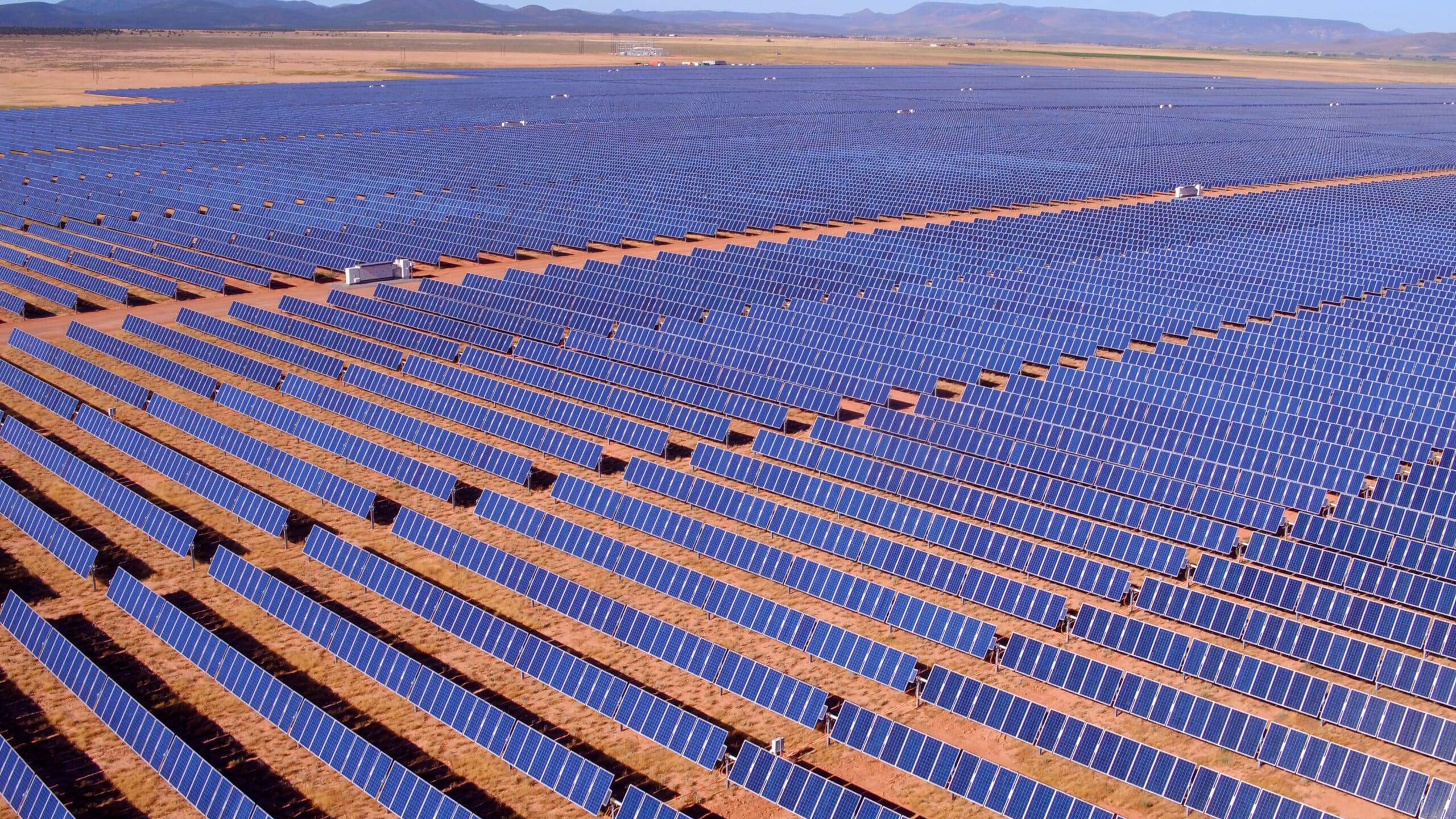
Imagine growing your wealth while directly combating climate change. For many investors, profit alone isn’t enough; they want their money to make a difference. Utility-scale solar farms provide both financial returns and measurable carbon reduction, making them an increasingly attractive option. That’s why digging into solar farm economics is so important.
With global demand for clean energy soaring, investor interest in solar farms is on the rise. But how profitable and reliable are these investments compared to traditional options like stocks or real estate? This article breaks down the fundamentals of solar farm economics, focusing on recent trends in ROI and IRR to help investors make informed, values-aligned decisions.
ROI vs. IRR: What’s the Difference and Why It Matters for Solar Investors
Return on Investment (ROI) measures total profitability relative to the initial investment. The formula is simple: (Net Profit / Initial Investment) × 100. For example, if you invest $50,000 and earn $60,000, your ROI is 20%. It’s a helpful metric for assessing a project’s big-picture profitability.
Internal Rate of Return (IRR), on the other hand, estimates the annualized efficiency of an investment. It solves for the discount rate that sets the net present value (NPV) of all future cash flows equal to zero. IRR is especially relevant in solar because returns unfold over many years. While ROI tells you if a project is profitable, IRR reveals how efficiently that profit is earned over time.
Using both metrics provides a more complete picture, allowing investors to compare solar projects fairly, align with long-term financial goals, and better evaluate risk-adjusted performance.
Solar Farm Economics: ROI Trends
Average ROI Comparison
Solar farm investments currently average an annual ROI of 13.52% (Paradise Solar Energy), outperforming many traditional investments. By comparison, stocks typically yield 7% to 10% annually, bonds offer returns between 3% and 5%, and real estate averages 6% to 10%.
Factors Influencing Solar ROI
Several key factors contribute to strong ROI in solar investments. The cost of solar technology has dropped dramatically (Solar Power Portal)—global solar PV prices fell by 82% between 2010 and 2019, significantly lowering capital requirements and boosting returns. Government incentives like the U.S. Investment Tax Credit (ITC), which provides a 30% tax credit on project costs, further enhance financial outcomes (SEIA). At the same time, demand for renewable energy continues to grow, with over 80% of new utility-scale renewable projects now more cost-effective than fossil fuel alternatives (IRENA). Long-term Power Purchase Agreements (PPAs) also play a vital role by locking in energy prices, reducing revenue volatility, and making solar projects more appealing to investors (SEIA). Taken together, these factors help solar investments deliver reliable, competitive returns with less volatility than many traditional asset classes.

Solar Farm Economics: Internal Rate Of Return
Solar farms typically deliver IRRs in the range of 5% to 8%, depending on installation costs, local energy pricing, and tax benefits (LEV, Shasta Power).
At Shasta Power, we target a robust 18% IRR across the life of the investment by combining returns from multiple projects, securing PPAs, and maintaining capital efficiency. IRR is especially useful when comparing projects with different payout timelines or when evaluating diversified portfolios. It helps investors understand how their capital performs year over year, not just in total.
Solar Farm Economics: A Win-Win for Financial and Environmental Goals
Financial Advantages
Solar farm investments offer several financial advantages that enhance long-term value. Thanks to Power Purchase Agreements (PPAs), these projects generate consistent and predictable revenue streams, which provide investors with greater financial stability. Additionally, as the clean energy market continues to grow, the underlying value of solar assets tends to appreciate, further boosting total returns over time (Shasta Power).
Portfolio Diversification
Solar is a non-correlated asset, offering resilience during stock or real estate market volatility. Adding solar to a portfolio enhances diversification and long-term performance (Shasta Power).
Environmental Impact
Solar investments deliver meaningful environmental benefits alongside strong financial returns. Each acre of solar panels can prevent up to 198 metric tons of CO₂ emissions annually, significantly reducing greenhouse gas output (Columbia Climate School). Beyond emissions, solar farms can also enhance local ecosystems by improving air and water quality and supporting biodiversity (Shasta Power). Through sustainable land use practices like agrivoltaics—where solar infrastructure coexists with agriculture—these projects can even contribute to improved soil health and more resilient farmland (Shasta Power).
Conclusion: Solar Farm Economics
Solar farm investments offer strong financial returns and can target high internal rates of return. Attractive ROI potential helps offset development-stage risk, while Power Purchase Agreements (PPAs) enhance revenue reliability once projects reach the operational phase.. Investors who support solar aren’t just diversifying their portfolios—they’re backing the future of clean energy. With Shasta Power, investing in solar is straightforward, impactful, and aligned with the values of sustainability-focused investors.
Next Steps with Shasta Power
Shasta Power develops utility-scale solar farms engineered for financial and environmental impact. Whether you’re seeking strong IRR or meaningful ESG outcomes, we offer investment opportunities that deliver both. Ready to learn more? Contact Shasta Power today for a consultation or details on upcoming projects.